Academic Integrity and Research Ethics:
Issues and Concerns Research and Education
Purpose
The
primary purpose of addressing academic integrity and research ethics is
to uphold the credibility, reliability, and validity of scholarly work. It aims
to foster a culture of honesty, responsibility, and respect for intellectual
property among researchers, educators, and students while preventing unethical
practices such as plagiarism, data fabrication, and authorship manipulation.
🧭 1. Introduction
❖ What is Academic Integrity?
- Definition: Faithfulness to ethical
values such as honesty, trust, fairness, respect, and responsibility in
academic settings.
- Why it matters: It ensures that knowledge
creation, learning, and assessment are genuine and trustworthy.
❖ What is Research Ethics?
- Definition: A framework of ethical
principles to conduct research responsibly and protect participants, data,
and the credibility of outcomes.
- Importance: Ensures that research
respects human rights, scientific standards, and societal welfare.
❖ The Risks
- Violations can eat away at
trust in science, lead to misinformation, and damage both individual and
institutional reputations.
Objectives
1. Promote Ethical Awareness: Educate students, scholars, and
faculty about ethical standards and responsible conduct in research and
education.
2. Prevent Misconduct: Reduce instances of plagiarism, falsification, fabrication, and
unethical authorship through policies and preventive measures.
3. Encourage Transparency: Promote openness in research
processes, including data sharing, peer review, and conflict of interest
disclosures.
4. Support Responsible Publication: Ensure integrity in publication
practices by discouraging duplicate publication, citation manipulation, and predatory journal submissions.
5. Enhance Institutional Policies: Develop and implement codes of
conduct, ethics committees, and training programs in academic institutions.
6. Foster a Culture of
Accountability: In still
values of honesty and accountability within educational and research
communities.
🧱 2. Core Principles of Academic Integrity
|
Principle |
Explanation |
|
Honesty |
Reporting
data truthfully, avoiding cheating or misrepresentation. |
|
Trust |
Creating
an environment where academic outputs are believed to be credible. |
|
Fairness |
Equal
opportunity for all participants and proper grading or evaluation. |
|
Respect |
Acknowledging
others' work and contributions via proper citations. |
|
Responsibility |
Accepting
accountability for one's actions in research and academia. |
|
Courage |
Taking
a stand against unethical practices, even under pressure. |
⚖️ 3. Key Ethical Principles in Research
❖ Informed Consent
- Participants must
voluntarily participate with a clear understanding of actions, risks, and
benefits.
- Example: In a medical trial,
patients must be informed about possible side effects before
participation.
❖ Confidentiality
- Personal data must be protected.
- Example: A study involving
students’ mental health should anonymize identifying details.
❖ Beneficence & Non-Maleficence
- Beneficence: Research should aim to
benefit individuals or society.
- Non-Maleficence: Avoid affecting damage to
participants.
- Example: Avoiding mental damage in
interviews about shock.
❖ Justice
- Fair distribution of risks
and benefits among all participant groups.
- Avoiding misuse of helpless
populations.
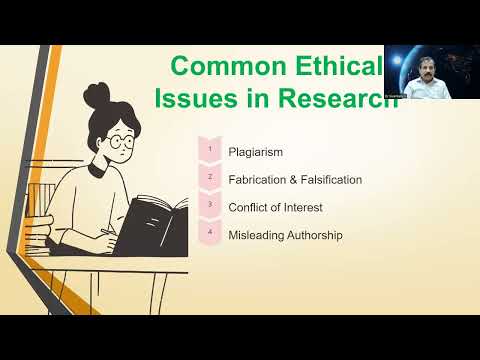
⚠️ 4. Common Ethical Issues in Research
|
Issue |
Description |
|
Plagiarism |
Copying
others' ideas or work without acknowledgement. |
|
Fabrication |
Making
up data or results. |
|
Falsification |
Manipulating
research processes or altering data. |
|
Conflict
of Interest |
Personal
or financial interests that compromise objectivity. |
|
Misleading
Authorship |
Listing
unworthy authors or omitting actual contributors. |
🧨
5. Consequences of Unethical Research
❖ Damage to Credibility
- Loss of academic and public
trust.
- Example: In 1998, Wakefield and 12 of his colleagues published an
imperfect study in The Lancet
linking the MMR vaccine to autism, notwithstanding a small sample and weak
evidence. This led to widespread fear and a significant drop in
vaccination rates.
❖ Harm to Participants
- Breach of privacy or
physical/mental damage.
❖ Legal Issues
- Civil or criminal
consequences (e.g., lawsuits, funding withdrawal).
❖ Career Impact
- Retractions, dismissal from position, and being blacklisted in academia.
🏛️ 6. Institutional Responsibility
|
Measure |
Purpose |
|
Clear
Guidelines |
Institutions
should have transparent, accessible codes of conduct. |
|
Training
& Awareness |
Provide
regular ethics workshops and courses. |
|
Ethics
Committees |
Review
and approve research proposals, especially those involving human subjects. |
|
Whistle-blower
Protection |
Encourage
and protect those who report unethical practices. |
🌐 7. International Standards and Codes
|
Code/Standard |
Key Contributions |
|
Declaration
of Helsinki |
Ethical
principles for medical research with human subjects. |
|
Belmont
Report |
The U.S.-based
framework focused on respect, beneficence, and justice. |
|
COSEPUP |
Ethics
guidelines for science and engineering research. |
|
OECD
Guidelines |
Highlights
transparency, reproducibility, and ethical behavior globally. |
🚨 8. Emerging Concerns
❖ Data Integrity in the Digital Age
- Responsible management of
large-scale datasets and AI algorithms.
- Challenges: algorithmic
bias, data privacy, and reproducibility.
❖ Open Access & Publication Ethics
- Issues like ghostwriting,
citation inflation, or biased peer review.
- Pressure to publish may lead
to unethical shortcutting.
❖ “Publish or Perish” Culture
- Faculty and researchers may
cut corners or expand findings to meet quotas.
❖ Sensitive Topics
- Topics like genetic
engineering, mental health, or indigenous populations require heightened
ethical consideration.
🛡️ 9. Ensuring Academic Integrity
|
Action |
Purpose |
|
Follow
Guidelines |
Stand
by institutional and funding body ethics rules. |
|
Practice
Transparency |
Be
clear about methodologies, data sources, and rights of interest. |
|
Encourage
Peer Review |
Promote
study and feedback before publication. |
|
Educate
Continuously |
Train
researchers and students early and often. |
|
Use
Anti-Plagiarism Tools |
Detect copied
content and improper citation. |
🧪 10. Case Study: Ethical Breach
❖ Scenario
- A researcher fabricates data
in a clinical drug trial.
❖ Outcomes
- Exposure leads to
retraction, legal investigation, and institutional embarrassment.
- Participants were harmed due to
false conclusions.
❖ Lessons
- Importance of audits,
transparency, and whistleblower systems.
Solutions and Future Directions
Ethical
Leadership
Fostering
mentors who model integrity.
Resource
Development
Tools for
responsible data management and sharing.
Program
Improvement
Continuous
assessment to strengthen integrity initiatives.
Collaboration
Building
partnerships among institutions and funders.
✅ 11. Conclusion
- Academic integrity and
research ethics
form the backbone of trustworthy science.
- Violations can lead to widespread harm
— intellectually, socially, legally, and professionally.
- Institutions must play a proactive role
in cultivating ethical awareness and enforcing standards.